How Long Does It Take Google To Index New Content? A Must-Read
Publishing an article on your website doesn’t guarantee immediate visibility. Your content will only become visible in Google search engine results when the Googlebot crawls and indexes it.
Google indexing means Google has identified your content and stored it in its digital library. That way, when people search online using relevant keywords, your content may appear in the search result.
So, how long does it take Google to index new content? It can take from a minute to days, a week or several weeks. That’s the short answer.
The long answer is that several factors influence Google indexing speed. This range from authority, content signal, crawl efficiency, to technical SEO.
Here we explained all you need to know about Google’s indexing speed, and how you can make search engines index your content much faster. Read on!
Meaning of Indexing in Google’s Ecosystem
How does Google view indexing in its ecosystem? Let’s dissect it before discussing the search engine’s possible indexing timelines.
Firstly, note that indexing doesn’t just happen. Other processes must take place before it does.
When you publish a piece of content on your website, it undergoes three different stages:
Crawling stage: Here’s the stage where Google learns about your URL.
Rendering stage: Google needs to understand the context of your content. So, here, it processes the content of the page the URL belongs to. It needs to understand the context of the content for better categorization.
Indexing stage: Google has discovered your URL, and understood the context of the page content. The final stage is to store the content on its digital library (indexing). It stores it in its searchable database..
All three processes are crucial for your content to become visible in the search engine result. Google needs to crawl, render, and index your content for it to start appearing in the search engine result page for relevant keywords.
Now, understand this clearly: Indexing isn’t permanent by default.
In other words, Google search engine can crawl your page, render it, and leave it unindexed.
Furthermore, Googlebot can crawl your page, and index it, but it won’t rank in the search engine result page.
Google can also crawl, and index your page, and remove it thereafter.
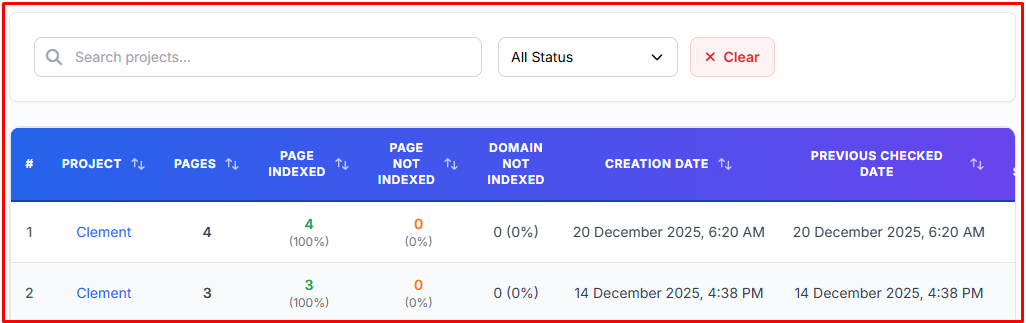
These three scenarios are possible. They can happen at any time. That’s why SEOs use tools like IndexChecker.io to check and monitor URLs in large numbers.
Website owners use Google Search Console to check URLs. But it’s not the solid choice for checking and monitoring bulk URLs.
How Long Does It Take Google To Index New Content?
It can take Google between 1 – 4 weeks to index new content, especially if the website is new. While for new content published on an established website, Google indexing can take place within a couple of hours to 3 days.
If the new content is blocked, thin, or boasts poor internal linking, Google indexing could take several weeks. In most cases, the search engine may never index the content. It can happen if Google doesn’t find the content index worthy.
Google’s Average Indexing Timeline and Tips
This table summarizes the average time it would take Google to index new content, including steps you can take to make the process happen quicker.
Scenario
Average Indexing Time
What You Should Do
New content on ahigh authority websites (news, major blogs)
A few minutes to few hours
● Useful content● Strong internal links
New content published on an established niche site
24 hours to 3 days
● Use strong internal links● Refresh sitemaps
● Use clean canonicals
New content on a new website (under 3 months old)
7 – 28 days
● Publish high-quality content regularly
● Use proper sitemap
● Follow proper internal linking
Newly updated (URL already indexed)
A few hours to 48 hours
Request Google indexing for crucial updates
Thin or low-authority websites
2 – 7+ weeks
● Improve content’s usefulness
● Eliminate duplication signal
● Strong internal linking
● Clean sitemap
New but poorly optimized content
Possibly never
● Optimize content● Make content useful
● Strong internal linking
● Fix sitemaps
Google hasn’t indexed my new content. It’s been weeks now. I am far ahead of this timeline.
If your question is similar to the one above, here’s the answer: you don’t have a time issue. Instead, you’re dealing with content quality or discoverability issues.
Is your content index worthy? Is it well-optimized? How is your internal linking? The answers to these questions will broaden your understanding of the state of your content.
Factors That Influences Google Indexing Time
Google uses sophisticated techniques that can evaluate a page and decide if that page is index worthy. There’s no biasness in how the search engine evaluates pages.
You can give Google a reason to index your page faster by adhering to these tips:
1: Quality over quantity:
Google indexes high-value content much faster than thin or unoriginal content. It can predict content’s usefulness to a larger extent before ranking.
Always focus on quality over quantity. Understand that having more content on your website doesn’t make it an established or reputable website. It’s the content’s quality that builds a website’s authority and value.
Avoid content that are:
SEO fillers
Lacks high user value
Poor optimized content
Offers zero original insights
Lacks proper depth and quality
Repeats already existing pages
Pro Tip: Your content should always be original and offer unique insight. Higher word count won’t increase Google indexing speed. Well-written 1500-word content might get indexed faster than a 5000-word poorly written content.
Write for users, not search engines. While SEO is crucial, focusing on it and not the user can impact the content’s final quality. Incorporate keywords, but focus on making your content super useful to users.
2. Technical SEO (search engine optimization):
Google takes into account a page’s experience during indexing. Pages that are fast, accessible and unbroken will get indexed faster than the ones considered broken, inaccessible or slow.
You also might be using the below indexing blockers unknowingly. Check them out:
Noindex tags
Excessive redirects
Canonical mis-configuration
JavaScript rendering problem
These blockers can prevent Google from crawling and indexing your website. Unfortunately, most website owners don’t know their sites have such problems until after a proper technical SEO audit.
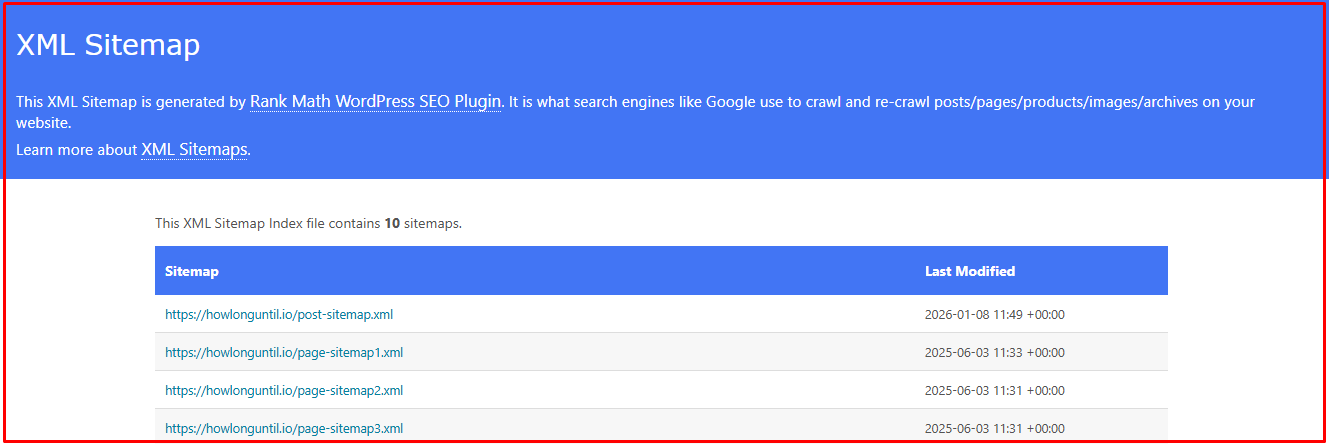
3. Proper XML sitemap implementation:
Sitemap creation and submission doesn’t guarantee that Google will crawl and index your pages. But it does offer several benefits when implemented properly.
Proper sitemap creation and submission will help search engine crawl and understand your most important pages quicker. It will also help visitors navigate your site easily.
Here’s how sitemaps can help speed up indexing:
Indicates page priority
Speed up discovery
Help Google understand your website structure better
Pro Tips: Choose one canonical URL version and stick to it throughout your sitemap. Avoid missing URL versions.
Below are reasons Google ignore sitemaps:
When sitemap is outdated
When sitemap is bloated
When sitemap is broken
Under these circumstances, Google will ignore your sitemap.
4. Strong internal links:
Having a robust internal linking structure can speed up Google indexing. Google indexes pages discovered via solid internal links rather than “orphan pages.”
You can create internal links that count by linking new content from quality and high-traffic pages. It’s a proven strategy to bring traffic and attention to your new pages. It helps distribute page authority to new pages too.
Another internal linking best practice is the internal linking strategy you’re using. Consider using contextual links in most cases, not navigation alone.
5. Crawl budget:
Two factors play a significant role in determining how fast Google crawls and indexes a website. These two factors are: website authority and crawl budget.
You already know what website authority is. But what is the crawl budget?
Google gives every website on the internet a crawl budget. That means both new and established websites have a crawl budget.
What’s the crawl budget concept about?
It’s the number of web pages the Googlebot is willing to crawl at a specific timeframe.
The higher your page authority, the higher your crawl budget, and vice versa. Google allocates more crawl budget to websites it trusts.
That doesn’t mean low-quality or new websites don’t get crawled. They only have a limited crawl budget and would have to give Google good reasons to increase their crawl budgets.
High authority websites have more crawl budgets and also:
Gets crawled more often
Get indexed much quicker
Recover faster from content updates
Unfortunately, low-quality and brand new websites receive very little crawl attention. The only way to scale visibility if your website falls into this category is to prove value.
Conclusion
So, how long does it take Google to index new content? It depends on the content and website authority. It can take anywhere from a few hours to weeks. New content published on an established website might take a few hours to a couple of days.
New content published on a new website might take a bit longer. In most cases, Google might even ignore the content if it wasn’t properly optimized.
We also discussed several factors that influence Google indexing speed. These range from crawl budget, website authority, internal linking strategy, XML sitemaps, content quality, and other technical SEO issues.
Denounce with righteous indignation and dislike men who are beguiled
and demoralized by the charms pleasure moment so blinded desire that
they cannot foresee the pain and trouble.